Solution intelligence
Under-Sink Reverse Osmosis Systems for 2026
Reverse osmosis removes the widest range of dissolved contaminants at the kitchen tap, including PFAS, arsenic, nitrate and lead. What to look for, what it costs to run, and which format fits your household.
Guide scope, not a prescription These figures describe this authored solution guide. They do not show what is present in your water or prove that a specific product fits your household.
What this solution is
Semi-permeable membrane separation removing dissolved minerals, heavy metals, and persistent fluorinated chemicals down to 0.0001 microns.
Water is forced under domestic line pressure across a dense semi-permeable polyamide thin-film composite (TFC) membrane. Contaminants larger than water molecules are rejected and flushed to the drain line, producing high-purity permeate water.
Concerns named in this guideThese links describe the contaminants or characteristics this approach may address. Relevance depends on the exact technology and certified claim.
When it makes sense
Potential fit
- Multiple documented contaminants
- PFAS above the MCL
- Arsenic or nitrate in groundwater
Not the right tool for
- Renters who cannot drill a faucet hole (see countertop RO)
- Whole-house scale control
How it works
- 1
Sediment and carbon pre-filters protect the membrane.
- 2
The membrane rejects dissolved ions and molecules, sending them to drain.
- 3
A post-filter or remineraliser polishes taste.
Limitations
- Discharges 1 to 3 gallons of brine wastewater for every gallon of purified water produced
- Removes beneficial healthy dietary minerals (calcium and magnesium); often paired with a remineralization post-filter
- Requires adequate household line pressure (minimum 40–50 PSI) or an electric booster pump
- Membrane pores can be fouled by high chlorine or sediment; requires carbon pre-filtration
Installation and maintenance
Installation formats
- Under-Sink with Dedicated Faucet
- Countertop Standalone System
- Commercial Whole-Home (rare, high cost)
Maintenance requirements
- Pre-sediment and carbon blocks: Replace every 6 to 12 months
- RO membrane cartridge: Replace every 24 to 36 months
- Post-carbon remineralizer: Replace every 12 months
Certification to verifyA standard on a product is not enough by itself. Verify that the certification listing names the reduction claim you need.
- NSF/ANSI 58 (Reverse Osmosis Drinking Water Treatment Systems)
Models with a matching claim
Products appear only after the capability and certification checks above. Confirm the current certification listing and capacity for your own water before buying.
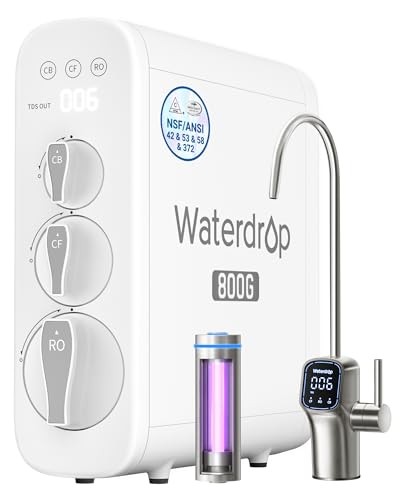
Under-Sink Reverse-Osmosis System
PFAS, arsenic, lead, nitrateOur pick: Waterdrop G3P800 Tankless Reverse Osmosis Water Filter System, 800 GPD
Recommended because Under-sink reverse osmosis targets the broadest range of dissolved contaminants (PFAS, arsenic, nitrate and lead) at the kitchen tap.
Recommendations are matched to the published findings first; the commercial offer is looked up afterwards and never changes which products qualify. As an Amazon Associate, PurityMap earns from qualifying purchases. Affiliate disclosure.
Frequently asked questions
Does reverse osmosis remove PFAS?
Yes. Reverse-osmosis systems certified to NSF/ANSI 58 with a PFOA/PFOS claim remove PFAS to below detection in independent testing.
Sources and methodology
This solution guide describes treatment capability, not local water quality. PurityMap keeps local findings on water-system reports and matches products only after a documented concern and relevant certified claim align.
How PurityMap evaluates water and treatment →